Board Planning Sets 3-5 Year Strategic Priorities

By: Bob Mundt, President & CEO

As we complete our strategic planning process, I’m excited to share four key priorities that are emerging. Over the next few months, staff will design and implement key programs and methodologies to advance these priorities and achieve the goals and objectives of the Forward Sioux Falls IX Campaign, the City of Sioux Falls, and the Foundation. The following have been identified by the Board as our 3–5-year strategic priorities.

Economic Development

  • Identify and target new industries to pursue that complement existing industry
  • Invest in companies that are already here
  • Identify and develop the next Foundation Park
  • Advance the Sanford District and showcase as a model of successful collaboration
  • Build and maintain development-ready land and infrastructure with a 5–7-year window
  • Protect existing economic development tools and mobilize partners in the pursuit of new or expanded tools
  • Redefine what counts as an economic development win – jobs vs. community impact
  • Aligning economic development targets with workforce training pipelines

Talent & Workforce Development

  • Improve how impact is measured and reported
  • Reset SFDF’s role in workforce development to convening, facilitating and problem solving alongside education and employer partners
  • Evolve workforce development programming to match the changing workforce
  • Assist in upskilling/reskilling existing workforce
  • Expanding early career exposure
  • Focus on retention of young talent through internships, apprenticeships, and job shadowing

Cooperation, Collaboration, and Partnerships

  • Define regionalism for SFDF and establish a structure around it
  • Strengthening cross-sector collaboration and resource pooling
  • Maintain and strengthen relationships across the board
  • Establish a proactive, intentional communications approach
  • Establish structured, routine collaboration where all partners can articulate a shared strategy and support SFDF’s role in it

SFDF Identity and Differentiators

  • Stay true to the Foundation’s Mission and Vision to avoid mission creep
  • Protect SFDF’s relationship-driven model and effectiveness
  • Improve public perception through consistent regional-level storytelling
  • Be proactive and transparent with communications when allowed
  • Establish clearer lanes of responsibility between key partners – City, County, GOED, Chamber, FSF, DTSF, SMGA, and education partners

Our team is excited to move the organization to the next level and appreciates the support of the Board and our strategic partners. Onward.

“If you don’t know where you’re going, you’ll never get there”

By: Clark Meyer, 2026 Sioux Falls Development Foundation Board Chair

Sioux Falls and the Development Foundation have gone through some transformative changes over the past five years, and even more changes and challenges are on the horizon. Recognizing that, the Board of Directors has enlisted the help of Maximizing Excellence to assist us with the next 3–5-year strategic plan for the Sioux Falls Development Foundation.

“With the change in leadership at City Hall and the beginning of the implementation of Forward Sioux Falls IX, the Board felt it was the perfect time to reflect on the successes of the past and plan for the challenges of tomorrow,” said Clark Meyer, 2026 Chair of the Board. “The Foundation has taken on more responsibilities including the changes in how we approach talent and workforce development, changes in our targeted industries, land development, housing, and the Sanford District redevelopment. We need to make sure we set ourselves up for success.”

“This is a window to shape the Foundation’s direction and develop a framework for evaluating and taking on issues and projects that encompass more than just Forward Sioux Falls goals,” said Randy Knecht, incoming Board Chair for the Foundation. “This establishes a board-driven direction and defines what is needed for a staff-driven execution.”

After gathering input from the Board of Directors, partner focus groups, and key informant interviews, Maximizing Excellence facilitated two half-day strategic planning sessions with the full Board and staff. Discussion topics included strategic/long-term investment of Foundation resources, a philosophy and approach to new land acquisition, improved workforce development initiatives, strategic recruitment, economic tools and political navigation, effective marketing, and cooperation in the region.

“This process is incredibly helpful in guiding the direction of the Development Foundation in the next few years,” according to Bob Mundt, President/CEO of the Foundation. “We have an amazing team here at the Foundation that will do everything possible to make sure this plan is carried out, and that we meet or exceed the goals and objectives being set for us. We appreciate all the feedback we received from our partners and stakeholders and look forward to leading this effort.”

Sioux Falls ranked a top-25 city for work 2026

Sioux Falls has been ranked a top-25 best city for work in 2026 by employment website and job search platform, Indeed!

Scoring 3 in the job opportunity category and 4 in the work-life category in Indeed’s interactive ranking tool, Sioux Falls offers not only great opportunities to find a job, but also a strong quality of life outside of work.

“The index scores 40 metrics across six pillars — Job Opportunity, Compensation, Job Quality & Security, Career Mobility & Dynamism, Work-life & Flexibility, and Economic Opportunity — for 228 US metro areas with more than 200,000 residents,” the release of the ranking says.

See which other cities made the list by clicking ‘read more’ at the link below.

Sioux Falls ranked best city in the U.S. for new college grads in 2026

Sioux Falls has been ranked the best city in the country for new college grads in 2026 by Checkr!

The ranking showed Sioux Falls scored in the top 10 for both affordability and employment, two factors critically important for new college grads.

“The 2026 overall rankings span all city sizes, and the top ten reflect a Midwest-heavy mix of communities where affordability and employment strength converge,” the release of the rankings says. “Sioux Falls, SD, leads the list this year, edging out last year’s frontrunners. Its top-ten employment ranking, excellent affordability, and solid social scores make it one of the most well-rounded metros in the country for young professionals.”

To learn more about the ranking and to see how other cities compared, click ‘read more’ below.

3rd quarter 2026 groundbreakings

It was a busy spring and summer with groundbreakings around the city! The Sioux Falls Development Foundation was pleased to host three groundbreaking ceremonies during the third quarter. Find a recap of each event below.

The Switchyard

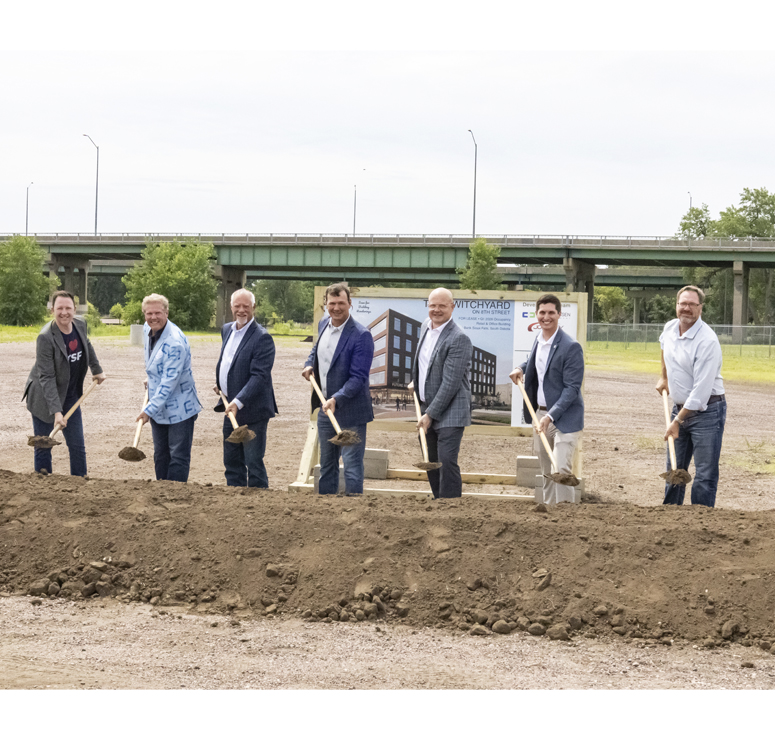
Christensen Development broke ground on The Switchyard, a multi-phase, mixed-use development that will include a five-story, more than 60,000-sq.-ft. office building and two residential buildings (totaling approximately 270 residential units) and a parking garage. Construction of the first phase of the project, the office building, is slated to begin late fall 2026.

L to r: Brandon Hanson, Miles Beacom, Councilor Curt Soehl, Clark Meyer, Jake Christensen (president), Justin Heim, and Tony Wiseman.

Plains Commerce Bank

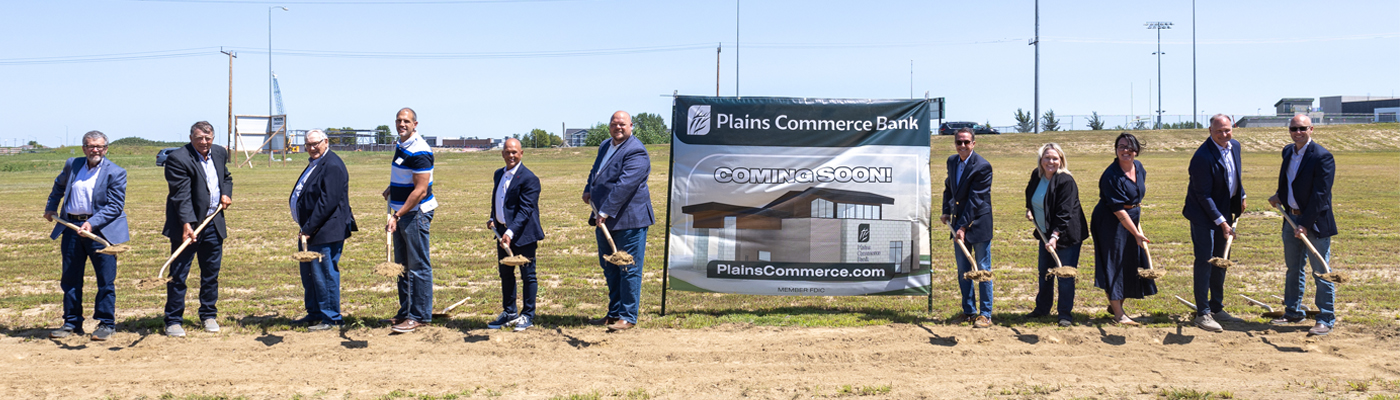
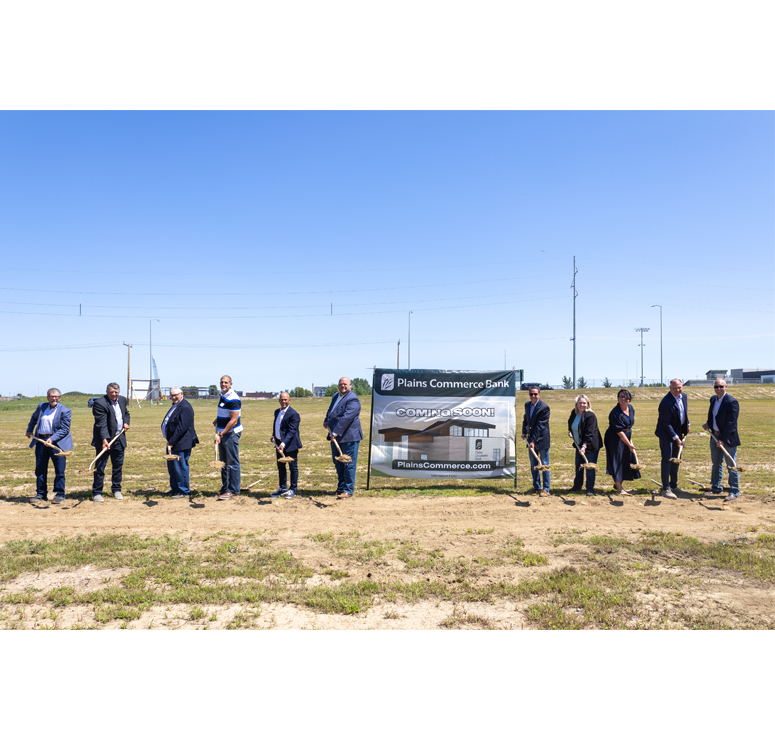
Plains Commerce Bank broke ground on a new branch in Jefferson Heights. The over 4,100-sq.-ft. branch will be a full-service location, with a drive up and ATM.

L to r: Randy Robinson, Jerry Brickner, Wes Tschetter, Tamien Dysart, Chris Vinson, Jason Sundberg, Rob Ronayne, Councilor Jennifer Sigette, Cassie Hopper, Randy Knecht, and Cody Hageman.

Habitat for Humanity of Greater Sioux Falls Cliffview Heights Development

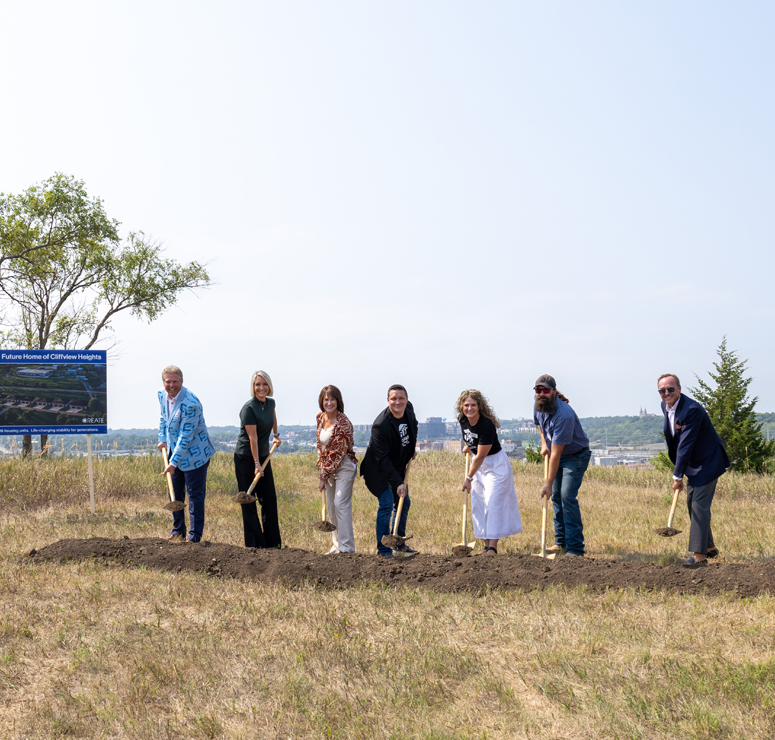
Habitat for Humanity of Greater Sioux Falls broke ground on their second affordable housing development, Cliffview Heights. The project consists of eight twin-homes, creating 16 owner-occupied residential units for income-qualified households. Each home will have a functional floor plan with a full basement, providing additional living and storage space.

L to r: Miles Beacom, Mayor Christine Erickson, Cindy Newman, Rocky Welker (executive director), Monica Rilling, Dustin Kuhl, and Kent Cutler.

From college sweethearts to college professionals, couple moves across Midwest for new S.D. roles

They met in college, worked together at a college and now are building a new life in Sioux Falls after landing roles at different colleges.

Matthew Flaten and Laura Dean made the move west to South Dakota from Illinois over the summer and have both started the new school year in new roles: Matthew at Dakota State University as a strategic communications coordinator and Laura at Augustana University as an associate professor of government and international affairs.

“It was kind of a perfect fit,” said Flaten, who met Dean while the two were students at the University of Wisconsin Eau Claire.

Matthew Flaten and Laura Dean with snow covered trees behind them

They married in 2011 and both held roles at Millikin University in Illinois prior to taking on their latest positions.

“We met in the Student Senate, so I always tell my students you should enter student government,” Dean laughed. “That and it’s good experience debating.”

Matthew Flaten poses with Laura Dean who is wearing academic regalia

A study abroad experience in college led her to an interest in Eastern Europe and graduate school at the University of Washington — the only university that teaches the Latvian language in the United States. A Fulbright research fellowship led her to an anti-trafficking shelter in Latvia and a passion for researching human trafficking, which she did through fieldwork in Ukraine, Latvia, and Russia.

She’s now director of the Human Trafficking Research Lab at Augustana.

“It’s amazing at Augustana,” she said. “It’s a great job at a great university. As soon as I saw this opportunity, I said it seems like the place to be.”

When she accepted her offer, Flaten began looking for opportunities in the Sioux Falls area — and quickly connected with DSU.

He’s a political science major who earned his master of healthcare administration at the University of Washington before becoming a sports journalist and then moving into public relations at Millikin. His new role involves telling stories from DSU’s campus in Madison as well as its recently opened Applied Research Lab in Sioux Falls.

“When we made a transition to Sioux Falls, I didn’t anticipate finding a job this smoothly,” he said. “I’ve now been learning the intricate details of cybersecurity and government relations, so it’s been a good couple months.”

Matthew Flaten and Laura Dean with the Falls at Falls Park in Sioux Falls, SD behind them

They moved from what they called “the cheapest real estate market in the country” in Decatur, Illinois, “so we knew we might be a little shocked by home prices and it could have really not gone great,” Dean said. “But we came in and found a house we liked and put in an offer and we were able to close on it a month later.”

While both had passed through Sioux Falls as kids — she’s from Minnesota and he’s from Wisconsin — they weren’t overly familiar with their new home.

Matthew Flaten and Laura Dean in a narrow, orange-rock canyon

“My parents owned a small business and we would come here for conventions when I was a kid, and compared to what I remember the changes downtown are amazing,” Dean said. “The historical renovations and the small businesses show they’ve really done a great job. I’ve had family come down and in Minnesota there can be a little stigma about South Dakota, but every single person who has come has said, ‘Wow, this is nice.’”

She’s become a big fan of local coffee shops and had a memorable time when her sister visited.

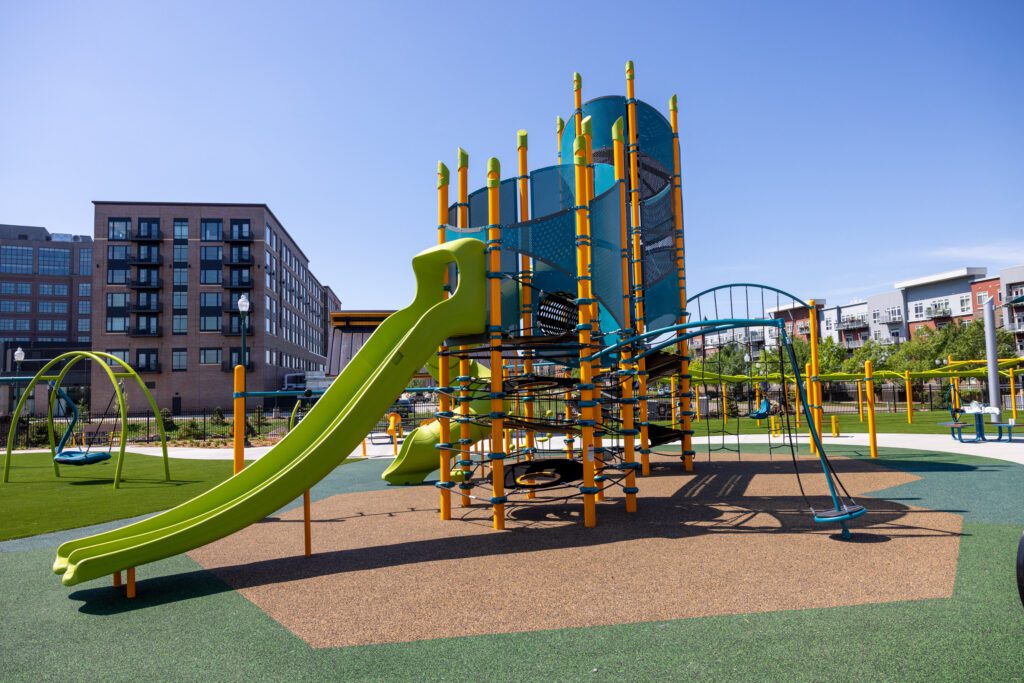
“My sister has a child with a disability and we spent a great afternoon at Jacobson Plaza at the accessible playground for kids,” she said.

A play structure at Jacobson Plaza in Downtown Sioux Falls, SD

“Then we went to Sertoma Park and when we were at the park we met the disability community through an event organized by Wheelchair Adventures. A mom connected with my sister and said to let her know if she ever needs anything when she comes to town. Everyone was so welcoming and willing to lend a hand.”

For Flaten, “Sioux Falls was a pit stop on the way back to the Black Hills and I never spent much time here,” he said. “I don’t think I had ever seen the Falls, and it’s really nice, as is all the community stuff we’re finding — farmers markets and local art.”

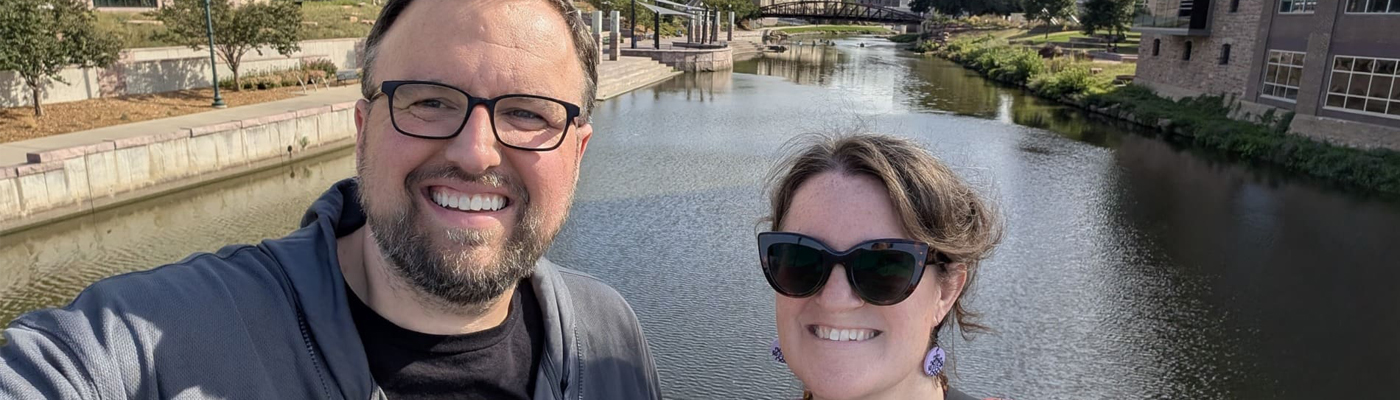
Matthew Flaten and Laura Dean with the Big Sioux River in Downtown Sioux Falls in the background

They’re both looking forward to hockey season, including watching Augustana games at the Midco Arena and supporting the Latvian players on the Sioux Falls Stampede.

“Plus we’re both close to family now,” Flaten added. “Everything we used to do was eight or nine hours to see anyone, and now we can be back and forth in less than four hours which is amazing.”

After leaving Minnesota and Wisconsin 20 years ago, “honestly coming to Sioux Falls and South Dakota feels very much like home,” Dean said. “I’ve never had anyone ask me about my accent here! They just assume I’m from here which is amazing. That doesn’t happen other places. It feels like home already, and I’ve only been here a month.”

To learn more about the opportunities that await with a move to Sioux Falls, start here.

Calling all area manufacturers

Content provided by South Dakota Manufacturing & Technology Solutions.

South Dakota Manufacturing & Technology Solutions (SDMTS) is pleased to offer the South Dakota Supply Chain Mapping Tool, a free online resource designed to help manufacturers, suppliers, economic development professionals, and other stakeholders better understand and connect within South Dakota’s manufacturing ecosystem. The web-based tool allows users to search and explore manufacturing companies across the state by location, industry classification (NAICS), company size, and other criteria. The tool can be used to identify potential suppliers, customers, business partners, and sourcing opportunities while providing greater visibility into the state’s manufacturing network. Supply Chain Mapping Tool – South Dakota Manufacturing & Technology Solutions

Companies are encouraged to review their information within the tool to help ensure accuracy and completeness. While the database is compiled from third-party business data sources, we welcome feedback and corrections from manufacturers. If you notice inaccurate company information, missing capabilities, or other updates that should be considered, please contact Angela Allen at SDMTS (angela.allen@sdmanufacturing.com). Your feedback will help improve the quality of the information available and strengthen this valuable resource for South Dakota manufacturers and supply chain partners.

What Does Economic Development Actually Look Like?

The work behind the headlines—and why it matters to the future of Sioux Falls


When most people think about economic development, they probably picture a groundbreaking ceremony, a new building going up or a company announcing that it is coming to Sioux Falls.

Those are certainly visible signs of economic development.

But they are only the final chapters of a much longer story.

Behind every project announcement are months—and sometimes years—of conversations, planning, research, relationship-building, negotiations, infrastructure planning, workforce considerations and problem-solving.

That is the work of the Sioux Falls Development Foundation.

Economic development is about creating the conditions for businesses to invest, grow and create quality jobs—and making sure Sioux Falls is prepared when the next opportunity arrives.

Here is what that work actually looks like.

1. The Opportunity

Economic development often begins long before a company ever announces a project.

A business may be considering an expansion, looking for a new location or evaluating several communities across the country. Site selectors, commercial real estate brokers and corporate decision-makers examine a long list of factors: available land, transportation, utilities, workforce, operating costs, taxes, quality of life and the community’s ability to support long-term growth.

The Development Foundation’s role is to make sure Sioux Falls is part of that conversation—and to be prepared to respond when an opportunity arises.

That preparation includes maintaining relationships with companies, site selectors, brokers and economic development partners; marketing Sioux Falls nationally; responding to requests for information; hosting prospects; and providing the data companies need to make informed decisions.

The goal isn’t simply to attract a company.

It is to make Sioux Falls a community that is prepared when opportunity knocks.

2. The Site

Once an opportunity develops, the conversation often turns to one fundamental question:

Where can this company go?

For an industrial or manufacturing project, the answer requires much more than an available piece of land.

Companies need appropriate zoning, transportation access, utilities, rail or highway connections, adequate acreage and the ability to begin construction within their required timeline.

This is where land development becomes economic development.

Foundation Park is perhaps the clearest example.

Developed by the Sioux Falls Development Foundation, Foundation Park was created to provide the type of large-scale, shovel-ready industrial sites that major companies require. Its location at the intersection of I-29 and I-90, along with access to BNSF Class I rail and utilities, demonstrates how site readiness can become a competitive economic-development asset.

The lesson is simple:

You can’t recruit what you don’t have.

Having quality industrial land available before a company needs it can be the difference between being considered for a project and being eliminated from consideration.
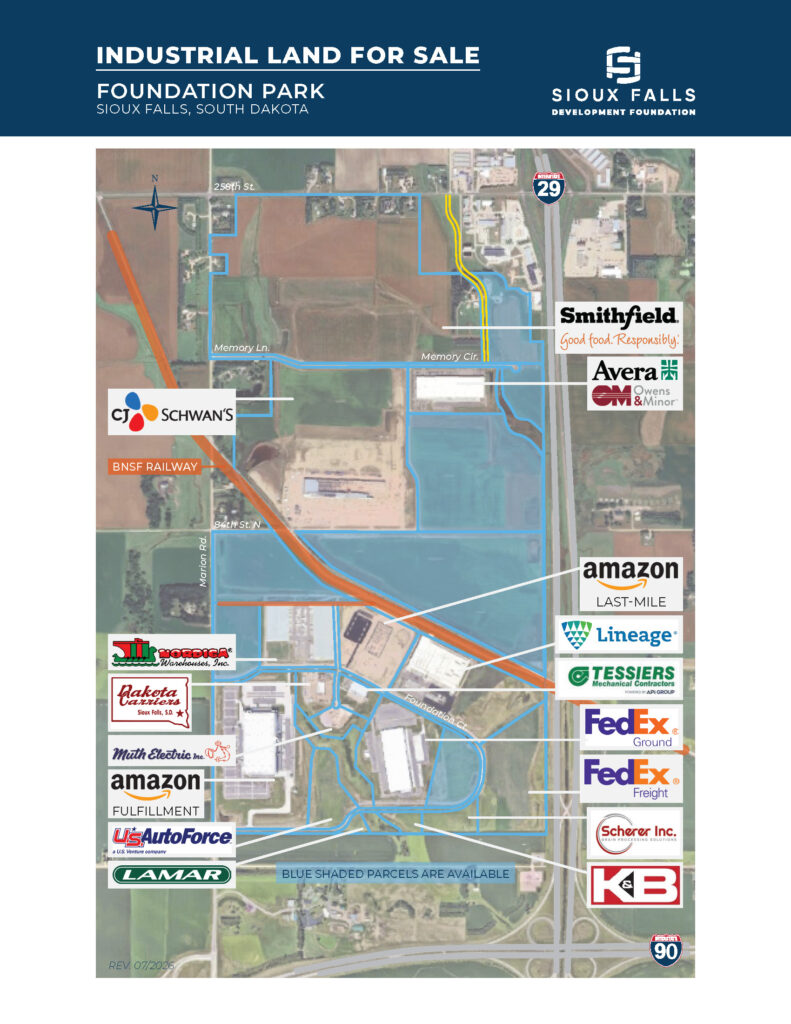
A map of tenants and available land in Foundation Park in Sioux Falls, SD


3. The People

Land may attract a company.

People allow it to grow.

Workforce availability has become one of the most important factors in economic development. A company considering a major investment needs confidence that it can recruit, train and retain the people necessary to operate its business.

That makes talent and workforce development an essential part of economic development—not a separate conversation.

The Development Foundation works with employers, schools, universities and community partners to strengthen those pathways.

Programs such as internships, apprenticeships, career exploration and talent attraction are designed to connect people with opportunities while helping employers develop the workforce they need.

This is why the Foundation views its work as two sides of the same house: Economic Development and Talent & Workforce Development.

You need both.

4. The Partnerships

No economic development organization does this work alone.

Successful projects require cooperation among businesses, developers, property owners, utilities, financial institutions, education partners, local government, state government and economic development organizations.

The Development Foundation often serves as a connector—bringing the right people to the table, helping identify challenges and working with partners to find solutions.

The recent Smithfield Foods project provides a good example.

When Smithfield evaluated its future in Sioux Falls, the opportunity involved far more than identifying a new location. The Development Foundation worked with the City of Sioux Falls and the Governor’s Office of Economic Development over several months to address land requirements, planning considerations and other issues while maintaining confidentiality around the discussions.

The announcement was the moment the public saw the result.

But the work had been happening long before the announcement.

That is often what economic development looks like: people from different organizations working together behind the scenes toward a common objective.

5. The Deal

Economic development projects are rarely as simple as a company deciding, “We want to move to Sioux Falls.”

There are questions to answer.

Can the site accommodate the project? Can infrastructure be delivered on schedule? What will the project require from utilities and transportation systems? What workforce challenges need to be addressed? What agreements need to be negotiated? What approvals are necessary?

There may be competing locations, changing timelines and issues that have to be resolved before a project can move forward.

Much of this work happens quietly.

Confidentiality is often an important part of the process because companies evaluating locations may not be ready to make their plans public.

And even after an announcement, the work isn’t finished.

Site preparation, infrastructure coordination, permitting, design and construction all follow.

The announcement is not the finish line. It is another milestone in the process.

6. The Announcement

Eventually, the hard work becomes visible.

There is a press conference.

There are cameras.

There is a groundbreaking.

There is a rendering of a new building and a company executive standing alongside community leaders.

For the public, that may feel like the beginning of the project.

For economic development professionals, it is often the culmination of months or years of work—and the beginning of another phase.

The announcement is when a community gets to see the result of the partnerships, preparation and planning that happened behind the scenes.

One economic development project can therefore create the foundation for the next opportunity.

Economic Development Is a Continuous Process

Economic development isn’t one project.

It isn’t one company.

And it certainly isn’t one groundbreaking.

It is the continuous work of preparing Sioux Falls for opportunity.

It means having industrial land available before a company needs it. It means investing in infrastructure. It means understanding the needs of employers. It means developing and attracting talent. It means building relationships with site selectors and companies. It means bringing public and private partners together to solve problems.

Most importantly, it means thinking beyond today’s announcement and asking:

What does Sioux Falls need to be ready for the opportunity that comes next?

That is the work of the Sioux Falls Development Foundation.

Sometimes that work is highly visible.

Much of the time, it isn’t.

But whether it is preparing a site, recruiting a company, developing a workforce, coordinating infrastructure or planning for the next generation of growth, the objective remains the same:

Create opportunities for businesses to grow, people to build careers and Sioux Falls to continue moving forward.

Because the groundbreaking may be the part everyone sees.
Find top talent at these fall 2026 college career fairs!

The Sioux Falls Development Foundation is committed to helping your business/organization connect with top talent at our regional colleges and universities.

Fall is the perfect time to begin recruiting for summer internships, and career fairs are great opportunities for your hiring team to engage with the students at our region’s colleges, universities, and technical schools.

Below is a list of upcoming college career fairs in our region. Registration for each career fair is required.

Fall 2026 College Career Fairs

Augustana University Rydell School of Business Career Fair
Wednesday, September 30 & Thursday, October 1, 2026 | 10 a.m. – Noon
Registration Link

South Dakota State University College of Agriculture, Food and Environmental Sciences Career Fair 2026
Wednesday, October 7, 2026 | 10 a.m. – 4 p.m.
Registration is full at this time. To be added to the waitlist, please email Becky Pistulka at becky.pistulka@sdstate.edu.

Southeast Technical College Healthcare Career Fair
Wednesday, October 14, 2026 | 11 a.m. – 1 p.m.
Registration Link

Dakota State University 2026 Fall Career & Internship Fair
Wednesday, October 21, 2026 | 10 a.m. – 2 p.m.
Registration Link

University of South Dakota Fall Career Fair 2026
Wednesday, October 21, 2026 | 1 p.m. – 4 p.m.
Registration Link

South Dakota State University Management, Economics & Communication Career Fair
Tuesday, October 27, 2026 | 1 p.m. – 4 p.m.
Registration Link

South Dakota State University Graduate School Recruitment Fair
Wednesday, October 28, 2026 | 1 p.m. – 4 p.m.
Registration Link

Southeast Technical College Business Career Fair
Thursday, October 29, 2026 | 11 a.m. – 1 p.m.
Registration Link

South Dakota State University Tribal Opportunities Career Fair
Wednesday, November 4, 2026 | 1 p.m. – 4 p.m.
Registration Link

South Dakota State University College of Psychology, Sociology & Criminology Career Fair 2026
Wednesday, November 4, 2026 | 1 p.m. – 4 p.m.
Registration Link

Southeast Technical College Horticulture and Sports Turf Management Career Fair
Wednesday, November 4, 2026 | 9:30 – 10:30 a.m.
Registration Link

University of Sioux Falls Healthcare Career Fair
Wednesday, November 4, 2026 | 11:30 a.m. – 1:30 p.m.
For Nursing, Exercise Science, Medical Laboratory Science, Radiologic Technology, and Paramedic Technology students.
Registration: Email Sarah Lems at Sarah.Lems@USiouxFalls.edu

South Dakota State University Education Placement & Job Fair Fall 2026
Wednesday, November 18, 2026 | 2 p.m. – 5 p.m.
Registration Link

Intern Sioux Falls Program

Our college career fair outreach is part of our Intern Sioux Falls program, which helps connect Sioux Falls businesses with students looking for internships.

The Intern Sioux Falls program offers two primary benefits to employers who participate:

1. Promotion of your organization’s internship program via siouxfalls.com/intern. This company listing is promoted through targeted digital marketing. If you’d like to have your organization listed, please complete this form.

2. Summer events for interns to network with other interns and become familiar with the Sioux Falls community.

Questions or want to learn more about the Intern Sioux Falls program? Contact us!

Workforce Summit speaker to tackle ‘the generation divide’

She was one of the most attended speakers at last year’s WIN in Workforce Summit — and this year she’s back with a message that’s applicable across workplace generations.

Liz Carlson describes herself as “a corporate leader turned workplace teacher — and a mother whose three neurodivergent children reshaped her definition of leadership.”

After years of building teams and leading in corporate spaces across the U.S., she pivoted from corporate leadership — and the travel that came with it —to classroom leadership, teaching in the MBA program at the University of Sioux Falls and business communication courses at Southeast Technical College.

In 2020, she launched Liz Carlson Professional Development, where she now serves as a keynote speaker, workplace teacher and belonging leader — helping leaders create environments where all minds can thrive.

At this year’s WIN in Workforce Summit, Carlson will host a breakout session breaking down the generational divides that can challenge a workplace, looking at how to engage your workforce in a way that all can contribute and are motivated to stay.

The 2026 WIN in Workforce Summit will be held Oct. 22 and is hosted by the Sioux Falls Development Foundation. It will run from 9 a.m. to 3 p.m. at the Canopy by Hilton hotel in downtown Sioux Falls.

Click here to learn more and register.

We sat down with Carlson for a preview of her cross-generational message.

Liz Carlson

Your presentation this year is “The Generation Divide: Engaging Everyone to Choose, Contribute and Stay.” What are we seeing in terms of the number of generations currently in the workplace, and are there key themes or characteristics you associate with each?

We’re living in a workforce moment unlike any other: five generations working side‑by‑side. That’s never happened in modern workplace history. Each generation was shaped by different parenting styles, world events and technology, and those influences show up every day at work.

A quick snapshot:

  • Traditionalists – Duty, discipline, respect
  • Baby boomers – Loyalty, contribution, experience
  • Gen X – Independence, efficiency, adaptability
  • Millennials – Purpose, collaboration, flexibility
  • Gen Z – Belonging, clarity, digital fluency

The heart of my presentation is simple: Generations aren’t a problem to solve — they’re a language to learn. When leaders understand what shaped each group, they can communicate in ways that reduce friction and increase engagement.

What are some of the most common questions you receive or issues you observe as employers attempt to integrate multiple generations in the workplace?

The questions I hear most often sound like this:

  • “How do I motivate everyone when they all want something different?”
  • “Why does communication feel so hard across age groups?”
  • “How do I build trust when expectations vary so widely?”

Most challenges come down to mismatched communication methods, unclear expectations and assumptions about work ethic or commitment. Once leaders understand the “why” behind each generation’s behavior, the path forward becomes much clearer — and much kinder.

As the workplace rapidly attempts to incorporate new technology, especially AI, are you seeing generational differences in terms of approach, adaptation and even fear? Are there some strategies employers can employ to manage this?

Absolutely — and the differences are real. Some generations are excited, some are cautious, and some are quietly terrified they’ll be left behind. The fear isn’t about the technology itself — it’s about competence, identity and job security.

Strategies that help:

  • Normalize learning curves — no one is supposed to be an expert overnight.
  • Pair digital natives with digital adopters for cross‑mentoring.
  • Communicate why new tools are being introduced, not just how.
  • Celebrate experimentation instead of perfection.
  • When leaders create psychological safety around learning, adoption skyrockets.

Communication strategy sometimes must be adapted for different generations. Do you have some advice to offer as employers try to navigate that?

Communication is where most friction happens — and where most healing happens too.

My advice:

  • Match the method to the audience.
  • Be clear, concise and consistent.
  • Don’t confuse “preference” with “competence.”
  • Use multiple channels for important messages.
  • Ask people what helps them do their best work — and honor it when possible.
  • Boomers often want a meeting. Gen X wants an email. Millennials want a Teams message. Gen Z wants a voice note. Same message, different decade.

Overall, what can attendees expect to take away from your presentation?

Attendees will leave with:

  • A clear understanding of what shaped each generation.
  • Practical tools to reduce friction and increase trust.
  • Communication strategies that work across age groups.
  • Insights on how to engage people so they choose, contribute and stay.
  • A fresh, humorous, human perspective on the modern workplace.

My goal is always the same: Make people laugh, learn and leave with something they can use immediately.

You’ve now become a regular presenter and attendee at the WIN Summit. What are your biggest takeaways from this event? How would you describe the overall value of the day to those who have not yet attended?

WIN is one of my favorite events because it brings together leaders who genuinely care about building better workplaces. The day is packed with practical insight, connection and energy. People show up ready to learn, ready to grow and ready to take something back to their teams.

For anyone who hasn’t attended: It’s one of the most valuable one‑day investments you can make in your people.

WIN in Workforce Summit

The WIN in Workforce Summit has become a popular regional event offering topical insights and strategies around the issues and challenges that are driving talent attraction, development and retention in the workplace today. This year’s event will feature nine impactful sessions, including a strategic look at how burnout, employment uncertainty with AI and shifting employee and employer expectations are reshaping engagement — and what leaders must do to sustain performance.

Additional details on speakers and sessions will be released in the coming weeks.

Following this year’s event, the Development Foundation will host the WIN in Workforce Summit every other year, alternating with the YPN Crossroads Summit. The next WIN in Workforce Summit will take place in 2028.

This program is valid for 4.25 PDCs for the SHRM-CP® or SHRM-SCP®. The Sioux Falls Development Foundation is recognized by SHRM to offer professional development credits (PDCs) for SHRM-CP® or SHRM-SCP® recertification activities.

To learn more and register, click here.

Workforce Summit to feature speaker whose take on overcoming rejection led to 10M-plus video views

How do you amass more than 10 million views on a TED Talk?

Start with a topic so universal everyone has experienced it — and would rather avoid it.

Rejection.

For Jia Jiang, it first took the form of an uncomfortable moment in his kindergarten classroom — the equivalent of being picked last for the team.

As he pursued a career in tech entrepreneurship, Jiang recognized his fear of rejection held him back from success. So he decided to meet it head-on.

It started with asking a stranger to borrow $100 — a quick “no.” Then it was requesting a “burger refill” at a restaurant. Again, he left empty-handed.

Jiang started to document his “rejection journey,” and by the time he packaged it into a 15-minute talk for the TED Talks speaking series, he not only had addressed his own internal hurdle but also found a new career path built around helping others do the same.

“It’s a journey,” said Jiang, now a bestselling author and speaker whose blog “100 Days of Rejection Therapy” details his adventures of being turned down for a wide range of requests.

He is also the CEO of Wuju Learning, a company that teaches people and trains organizations to become fearless through rejection training.

“The idea of overcoming fear of rejection is very common,” he said. “Most people care about what other people feel and want to feel good about themselves. That’s how normal people are wired, and it makes us afraid of rejection.”

Jiang tries to make it fun, funny and ultimately effective.

“Doing this is like giving you a different mindset, like a superpower,” he said. “I have to get a little uncomfortable, and then your mindset flips. Our everyday life is avoiding and comfort seeking, but when you flip that comfort switch, your whole personality changes, and opportunities open up.”

Jiang will detail that message as he gives the keynote address at the 2026 WIN in Workforce Summit on Oct. 22, hosted by the Sioux Falls Development Foundation. The annual event will be from 9 a.m. to 3 p.m. at the Canopy by Hilton hotel in downtown Sioux Falls.

Click here to learn more and register.

“I think Jia’s message will really resonate with our audience,” said Bob Mundt, president and CEO of the Sioux Falls Development Foundation. “We can all relate to what he talks about, especially in a changing workplace, and his approach will change the way you look at handling adversity and risk. It’s a great way to start a full day of effective strategies you can take back to work and put in place starting the following day.”

Change is constant in the workplace, Jiang said. Since he originally gave his TED Talk in 2015, his message around overcoming rejection has applied through the pandemic, a shift into remote work, challenging economic times and now as artificial intelligence reframes work life yet again.

“The pace of change is constant, but it’s the story you tell yourself as you face change that determines your success or failure,” he said.

Jia Jiang speaking near a podium with a pink uplit curtain behind him

Employers who have to “say no” a lot also will find takeaways from Jiang’s message.

“You cannot say yes to every applicant or take on every opportunity. That’s what leadership is,” he said. “It’s trade-offs, and saying yes to one thing means saying no to another. But you can do it in a way that does not destroy your leadership. The best people say no but also find ways to help. They see what others are trying to do, and they give direction or pointers accordingly.”

He puts a comedic twist on it: the Costco manager who handled one of his requests in an especially memorable way.

“I went to Costco and asked if I could speak on the intercom,” he said. “I told him I’m a good member, I spend a lot of money there, and I just want to say hi to the customers.”

The manager suggested he write a submitted article about his fandom for a Costco publication instead.

Jiang didn’t bite.

“I said again that I just want to use the intercom,” he said. “Then he asked if I was hungry, thanked me for being a good member and asked if he could buy dinner for me and my family.”

Jiang didn’t leave the wholesale club having gotten behind the microphone — but he did have his fill of pizza and hot dogs.

“That’s how you say no to people,” Jiang said. “You learn what they want and try to help, and if it doesn’t work, you still try to give them something. He treated me like a human being and not an annoyance.”

And that’s an interaction between two people who likely won’t ever see each other again.

“In the workplace, you’re going to see each other over and over, so how you build those relationships even through rejection is key,” Jiang said. “That’s where when you say no to people you also can use it as an opportunity to still help that person achieve their goals.”

Attendees at the WIN in Workforce Summit will leave with a universal message that applies not just at work but also in daily life, he added.

“We’ll talk about how to have tough conversations, how to advocate for your cause, how you respond to resistance and how you sometimes can turn a no into a yes,” he said. “They’re going to hear an amazing story, and it’s not just a rejection story but a way to ultimately achieve the things you want. I’m excited to be coming to Sioux Falls, and I know we’re going to have a great time.”

WIN in Workforce Summit

The WIN in Workforce Summit has become a popular regional event offering topical insights and strategies around the issues and challenges that are driving talent attraction, development and retention in the workplace today. This year’s event will feature nine impactful sessions, including a strategic look at how burnout, employment uncertainty with AI and shifting employee and employer expectations are reshaping engagement — and what leaders must do to sustain performance.

Additional details on speakers and sessions will be released in the coming weeks.

To learn more and register, click here.

Summer STEM: Hundreds of middle schoolers engage with local career paths

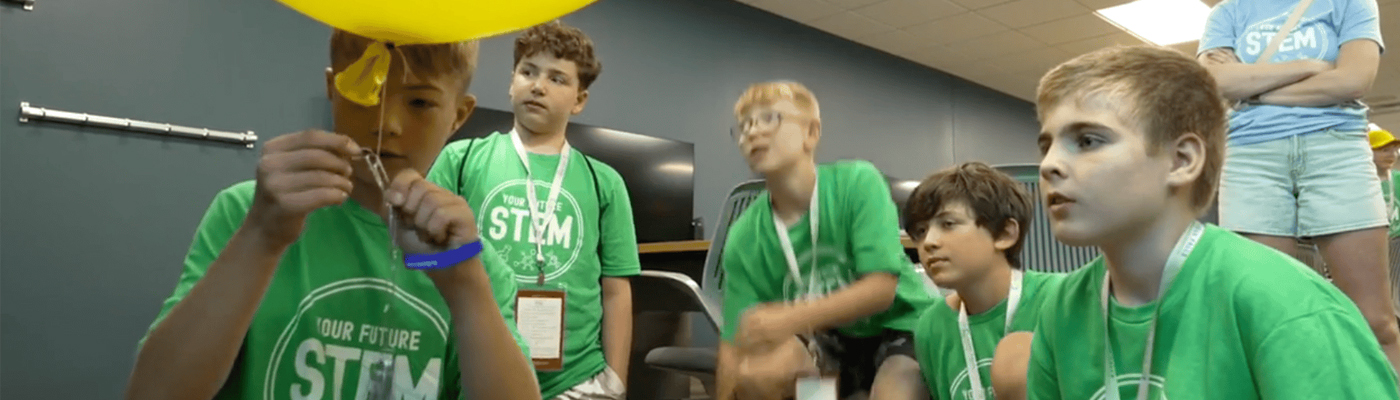
Using helium-filled balloons and paper clips, Aerostar International’s hands-on activity helps aerospace engineering curiosity take flight for area middle school students.

“Our company believes in giving back to the community and helping people out, making a difference,” manufacturing engineering technician Dane Jorgensen said. “We are always on the lookout for opportunities like this to encourage kids to look into engineering.”

That’s the goal of Your Future STEM summer camp, which this year drew more than 200 middle school students to Augustana University for two days of learning how science, technology, engineering and math connect to their potential careers.

“You want to see kids on the edge of their seats, listening intently,” said Denise Guzzetta, vice president of talent and workforce development for the Sioux Falls Development Foundation. “That’s how you know that they’re really engaged and they’re paying attention.”

Here’s a closer look at the day camps, which are designed by the Sioux Falls Development Foundation and funded through Forward Sioux Falls.

Your Future STEM Summer Day Camps 2026 Recap

Moving Sioux Falls Forward: Heartland Energy

Heartland Energy literally helps power the growth of Sioux Falls and the surrounding area.

The Madison-based nonprofit, public power company provides wholesale electricity to municipal utilities throughout the region.

A photo of a building with a sign in front of it that says 'Welcome to Madison' and 'Heartland Energy'

“In addition to reliable, affordable electricity, we offer a variety of programs and services to our customers, including energy efficiency, electrification, economic development and workforce development,” CEO Russell Olson said.

“We strive to be a partner to those we serve, offering technical expertise, educational opportunities and innovative energy solutions.”

Heartland Energy provides supplemental power to Sioux Falls under a long-term power sales agreement to its light and power division — one of four public utilities provided by the city.

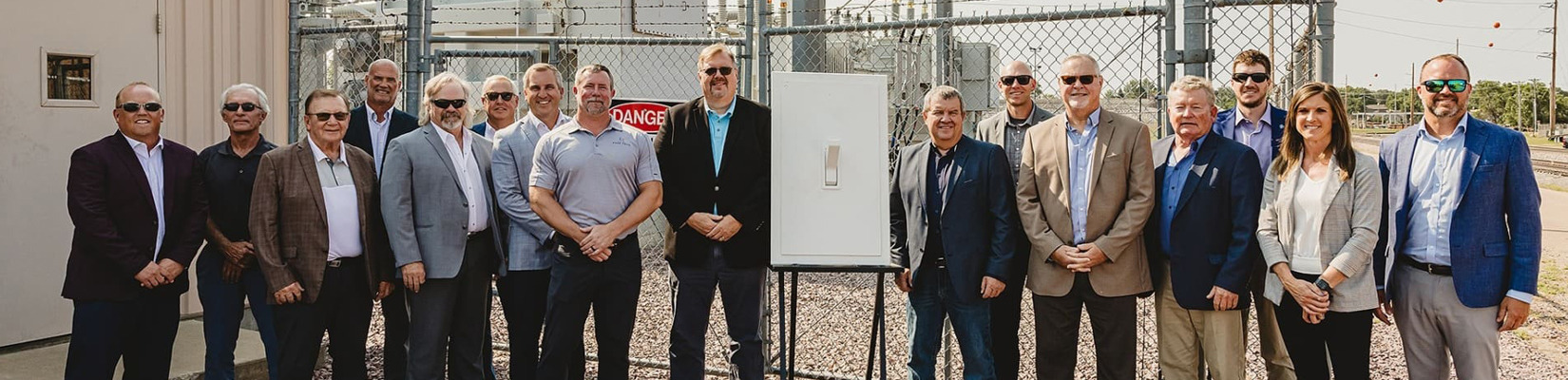
A photo of people standing next to a large light switch with a power substation in the background

It serves electricity to about 3,000 residential and commercial customers in the central and northern areas of Sioux Falls. Public buildings served include City Hall, City Center, Downtown Library, Denny Sanford Premier Center, Washington Pavilion, Water Purification Plant, Law Enforcement Center and several public school buildings.

A photo of a man pointing to content on a screen that says 'welcome electric 101' as three women observe

“This is one of those quiet entities that helps literally serve as a backbone to economic growth,” said Bob Mundt, president and CEO of the Sioux Falls Development Foundation. “Reliable energy is key to supporting business activity, and Heartland Energy is not just a trusted utility partner but a community-minded one.”

Here’s a closer look at Heartland Energy, courtesy of Russell Olson.

A photo of Russell Olson, CEO of Heartland Energy

Business name: Heartland Energy

Year founded: 1969

Year operations began in Sioux Falls: Heartland Energy began supplying supplemental wholesale power to Sioux Falls Light and Power in 2006.

Total employees in the Sioux Falls area: Heartland Energy is based in Madison with a total of 12 employees.
What are the top three reasons you continue to locate in the Sioux Falls area?

While Heartland is not located in Sioux Falls, the city is one of our largest wholesale customers, and we have a longstanding partnership with the city and its municipal utility. We continue to invest in this relationship because Sioux Falls is a growing community that values innovation, collaboration and long-term planning. Heartland has worked with the city on a number of initiatives. Sioux Falls was the first to take advantage of our Energy ONE Incentive, a special energy-only rate for new retail loads with an approximate demand of 1 megawatt or larger. The Denny Sanford Premier Center saw savings on their electricity bill of $1.2 million during their first five years of operation through the program. The same incentive was used to power the city’s Water Reclamation Plant, Public Safety Campus and Light, Power and Traffic building. These are essential new facilities crucial to the future growth and success of the city.
A photo of two men and a woman with an enlarged check that says 'Power Forward' written to the City of Sioux Falls for $5,000

What are you most proud of within your business in the past year?

We are most proud of our rate stability. We have not implemented a rate increase for our customers in nine years. There are a lot of factors that have helped achieve this, including sound financial planning and forward-thinking. But economic development also plays a role. Anytime we see growth in our customer communities, we see a corresponding increase in electricity sales, which helps keep overall costs down for customers. Economic development has a ripple effect – what’s good for one of our communities is good for all of them. That’s why we offer a suite of economic development programs, including low-interest financing, growth incentives, the Energy ONE Incentive and a special rate for large, flexible loads.
What do you see as the biggest challenge facing your business?

Our greatest challenge is managing change. The electric utility industry is evolving faster than ever — from new technologies and increasing demand to changing regulations and customer expectations. Our responsibility is to help our customer utilities navigate those changes while staying true to our core mission of providing reliable, affordable wholesale power.

How would you describe the culture of your business in three words?

Collaborative. Forward-thinking. Reliable.

Why does your business choose to invest in Forward Sioux Falls?

Although Heartland Energy is headquartered in Madison, our commitment extends to every community we serve. As the wholesale power supplier for the City of Sioux Falls, we recognize that a strong local economy benefits the utility, its customers and the entire region. Investing in Forward Sioux Falls demonstrates our commitment to supporting economic growth, strengthening strategic partnerships and ensuring reliable, affordable energy for the businesses and residents who call Sioux Falls home.

What specific advantages or values have you found to partnering with Forward Sioux Falls and its programs?

Supporting Forward Sioux Falls demonstrates a commitment to the city’s long-term success and reinforces Heartland’s role as more than a power supplier — it is a strategic partner invested in the community’s future. A thriving Sioux Falls economy supports a healthy, growing utility system and helps ensure Heartland can continue providing value through reliable and cost-effective energy solutions. Forward Sioux Falls brings together business leaders, government officials, developers and community organizations. Participation creates opportunities to build relationships and demonstrate Heartland’s commitment to the region.

What are your expectations for your business in the year ahead?

The year ahead presents exciting opportunities for Heartland Energy and the communities we serve. We expect to continue strengthening relationships with our customer utilities, supporting economic development initiatives and investing in energy solutions that promote reliability, affordability and long-term sustainability. As communities continue to grow, we’ll remain focused on being a trusted partner that helps power that success.

Forward Sioux Falls is a joint venture between the Greater Sioux Falls Chamber of Commerce and the Sioux Falls Development Foundation and is widely respected as the premier economic driver for the Sioux Falls region. To learn more and connect, click here.

From Kansas City, move to Sioux Falls brings opportunity for fashion career

When Ireland Frisch first considered relocating to Sioux Falls from Kansas City, she initially admittedly was “a little scared” by the prospect of a move.

“I had never heard of Sioux Falls, and I was nervous about a smaller town,” she said. “My hometown of Waterloo, Iowa, is similar in size, and I always wanted to leave. At the same time, I liked Kansas City, but it wasn’t quite where I was going to land. I just kind of knew that.”

Her first time visiting her boyfriend in Sioux Falls changed her mind immediately, she said.

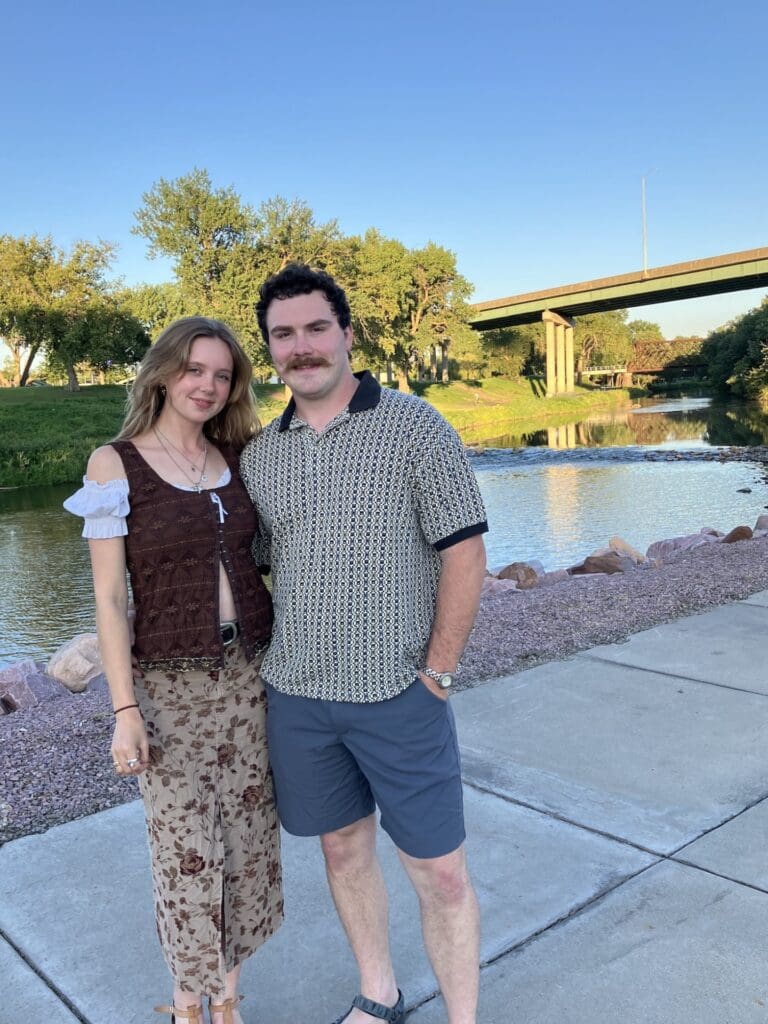
A photo of a woman and a man with a river and overpass bridge in the background

“He lived in a studio in the historic district right by the Cathedral, and it was the most beautiful neighborhood,” Frisch said. “We went downtown and did all the things because he was trying to convince me this is where we needed to be — and my mind was made up the first visit.”

She was sold by the neighborhoods, the history and the charm she found downtown, she said.

“I said, ‘I can see myself in a place like this.’”

A 2023 University of Northern Iowa graduate, she made the move north last year and began looking for ways to put her degree in textiles and apparel to work. She found a job at an alterations business, then one in a bridal store.

“I had no thought of finding a fashion job here,” she said. “But I looked every day on LinkedIn to see if maybe there was an opportunity, and then I found Gameday.”

A photo of a woman wearing a dress standing in front of a fountain with pink rocks

Frisch applied at Sioux Falls-based Gameday Social Apparel Co., a fast-growing national brand that designs and manufactures fashion-focused apparel and accessories for “the social fan.” The company creates licensed merchandise for nearly all major universities and is expanding into pro sports.

“I thought my interview went really well, but they said they wanted to save me for a role that was more creative than what they had open,” Frisch said. “And then about six months later, they emailed out of the blue and said they had a role for me. So they really meant it when they said they saw me in a more creative role in the future.”

She’s now a merchandising coordinator who says she loves forming a deep connection to universities and the histories within them.

A photo of two women in front of a white backdrop with confetti on the floor. One is holding pom poms and the other is holding a camera

“I get to design how the universities would want product to be sold and feed off that, so I love it, and the team is great,” Frisch said.

“I love a smaller team and the hard work of it where you get to wear a lot of hats.”

She also now works from a brand-new Gameday Social headquarters, which just opened in a renovated space in northeast Sioux Falls and positions the company for continued growth.

“I work with our director of merchandising to build out each collection from concept to creation,” Frisch said.

“I’m doing a lot of communication with our factories throughout production and then working with photo shoots around how the brand is portrayed. My everyday tasks are exactly what I learned in school, so that’s a testament to my program but also how cool I think my job is.”

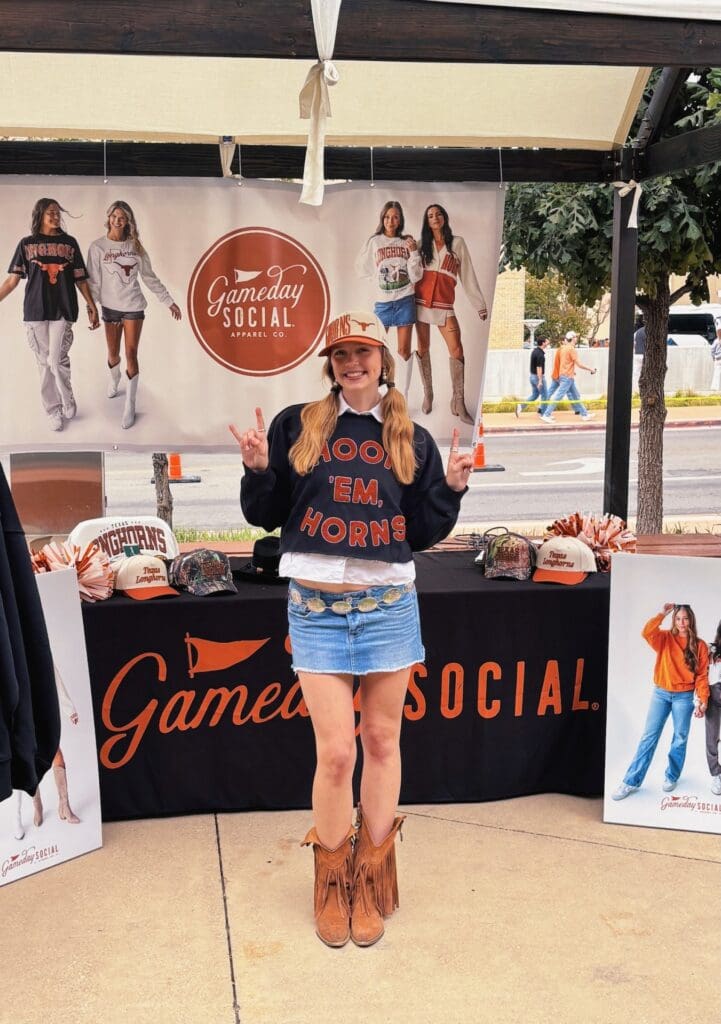
A photo of a woman standing in front of a Gameday Social booth featuring Texas Longhorns apparel

She and her boyfriend have moved from that historic district studio to a three-bedroom rental home on the east side with a fenced backyard for her dog.

“My rent in Kansas City for a one-bedroom apartment was more expensive than I’m paying for this house, by far,” she said. “It’s pretty perfect for what we’re looking for. It’s five minutes, and we’re over a bridge into downtown.”

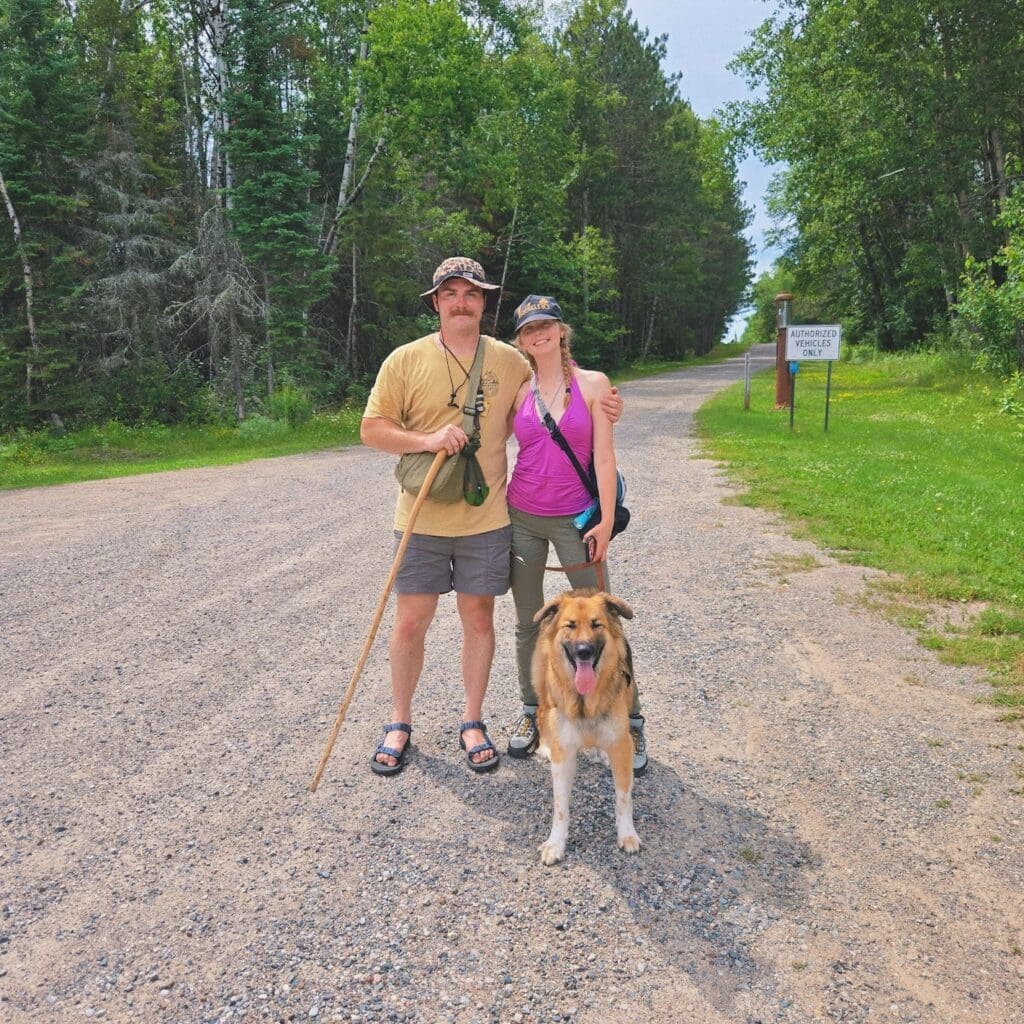
A photo of a man, woman, and dog on a gravel roadway with trees behind them

They enjoy being outdoors and have liked hiking and mountain biking at Great Bear Recreation Park.

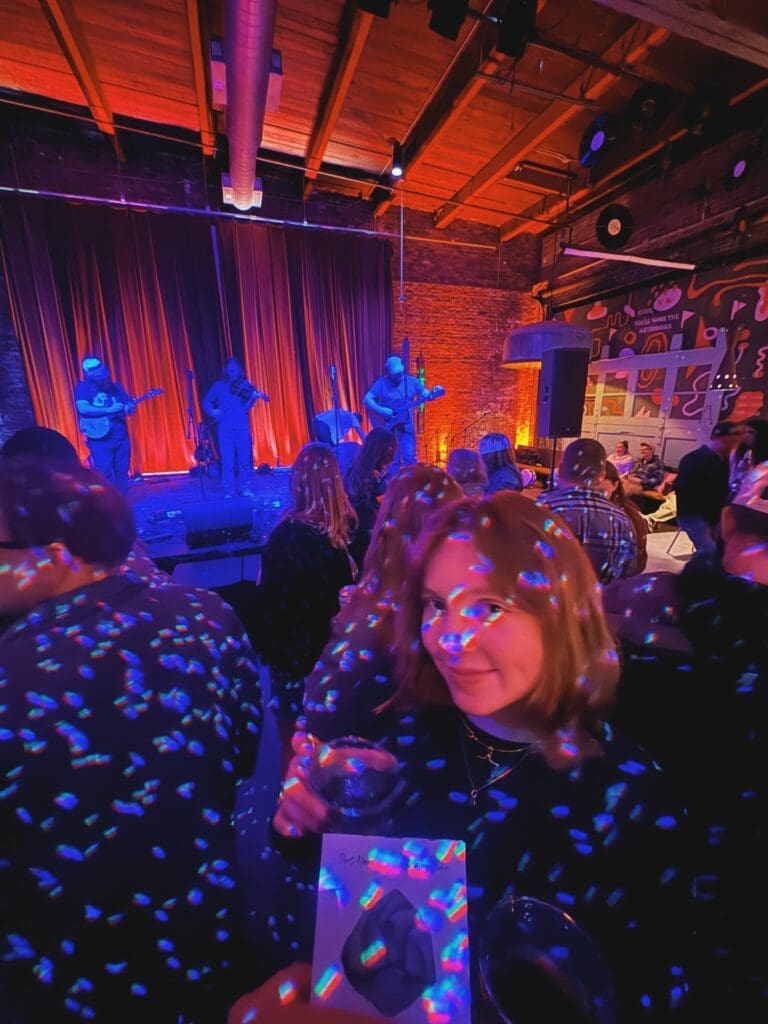
“We also like the music scene here and have made some friends with local band members, and we go to a lot of their shows,” she said.

A photo of a woman holding a drink with musicians on stage in the background

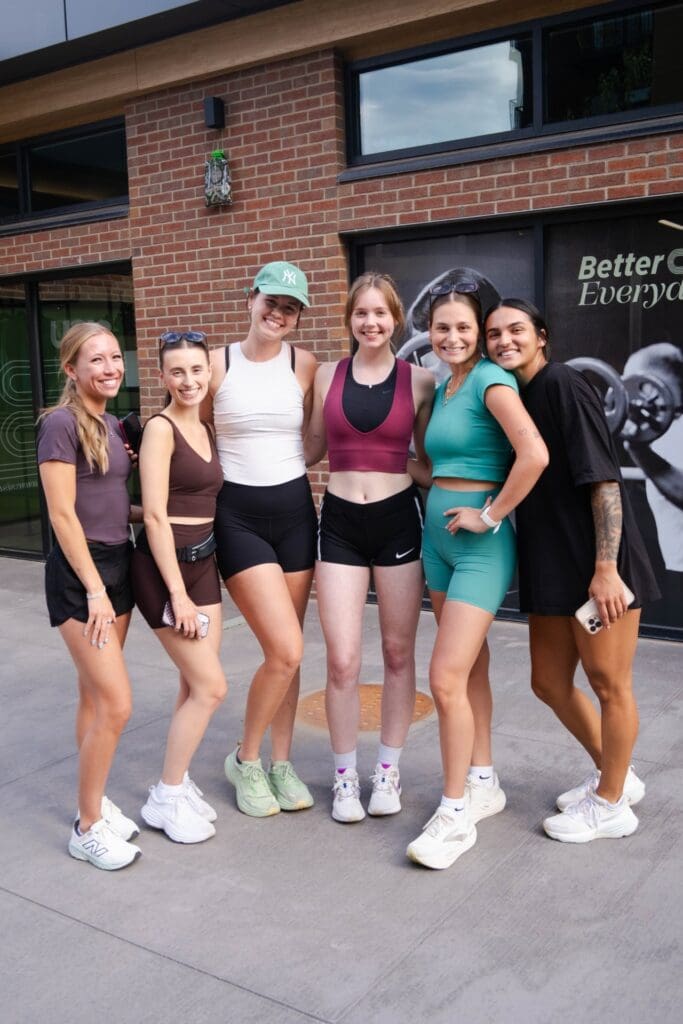
Frisch’s experience is a perfect example of what’s waiting for other young professionals in Sioux Falls, said Denise Guzzetta, vice president of talent and workforce development for the Sioux Falls Development Foundation.

A photo of six women smiling in athletic clothing

“I love how Ireland moved here because she could see herself in our community and then went on to find a dream job once she was here,” she said.

“It’s a good reminder that while we are known for certain key industries, we have an incredible startup community that even makes opportunities in areas like fashion become a possibility.”

To learn more about building your career in Sioux Falls, email deniseg@siouxfalls.com.

South Dakota ranked second-best on 2026 State Tax Competitiveness Index

South Dakota has been ranked No. 2 on the Tax Foundation’s 2026 State Tax Competitiveness Index.

The Index evaluates states’ tax competitiveness both overall and across various forms of taxes, including: individual income taxes, corporate taxes, sales and excise taxes, property and wealth taxes, and unemployment insurance taxes.

With no individual or corporate income tax, no personal property tax, and no inheritance tax, South Dakota’s second-best ranking illustrates the competitiveness of our tax climate for both individuals and businesses alike.

“The Tax Foundation’s State Tax Competitiveness Index enables policymakers, taxpayers, and business leaders to gauge how their states’ tax systems compare,” the executive summary accompanying the Index, said. “While there are many ways to show how much state governments collect in taxes, the Index evaluates how well states structure their tax systems and provides a road map for improvement.”

Read more about the methodology and see how other states compared by clicking ‘read more’ below, or compare in this interactive map!