The work behind the headlines—and why it matters to the future of Sioux Falls
When most people think about economic development, they probably picture a groundbreaking ceremony, a new building going up or a company announcing that it is coming to Sioux Falls.
Those are certainly visible signs of economic development.
But they are only the final chapters of a much longer story.
Behind every project announcement are months—and sometimes years—of conversations, planning, research, relationship-building, negotiations, infrastructure planning, workforce considerations and problem-solving.
That is the work of the Sioux Falls Development Foundation.
Economic development is about creating the conditions for businesses to invest, grow and create quality jobs—and making sure Sioux Falls is prepared when the next opportunity arrives.
Here is what that work actually looks like.
1. The Opportunity
Economic development often begins long before a company ever announces a project.
A business may be considering an expansion, looking for a new location or evaluating several communities across the country. Site selectors, commercial real estate brokers and corporate decision-makers examine a long list of factors: available land, transportation, utilities, workforce, operating costs, taxes, quality of life and the community’s ability to support long-term growth.
The Development Foundation’s role is to make sure Sioux Falls is part of that conversation—and to be prepared to respond when an opportunity arises.
That preparation includes maintaining relationships with companies, site selectors, brokers and economic development partners; marketing Sioux Falls nationally; responding to requests for information; hosting prospects; and providing the data companies need to make informed decisions.
The goal isn’t simply to attract a company.
It is to make Sioux Falls a community that is prepared when opportunity knocks.
2. The Site
Once an opportunity develops, the conversation often turns to one fundamental question:
Where can this company go?
For an industrial or manufacturing project, the answer requires much more than an available piece of land.
Companies need appropriate zoning, transportation access, utilities, rail or highway connections, adequate acreage and the ability to begin construction within their required timeline.
This is where land development becomes economic development.
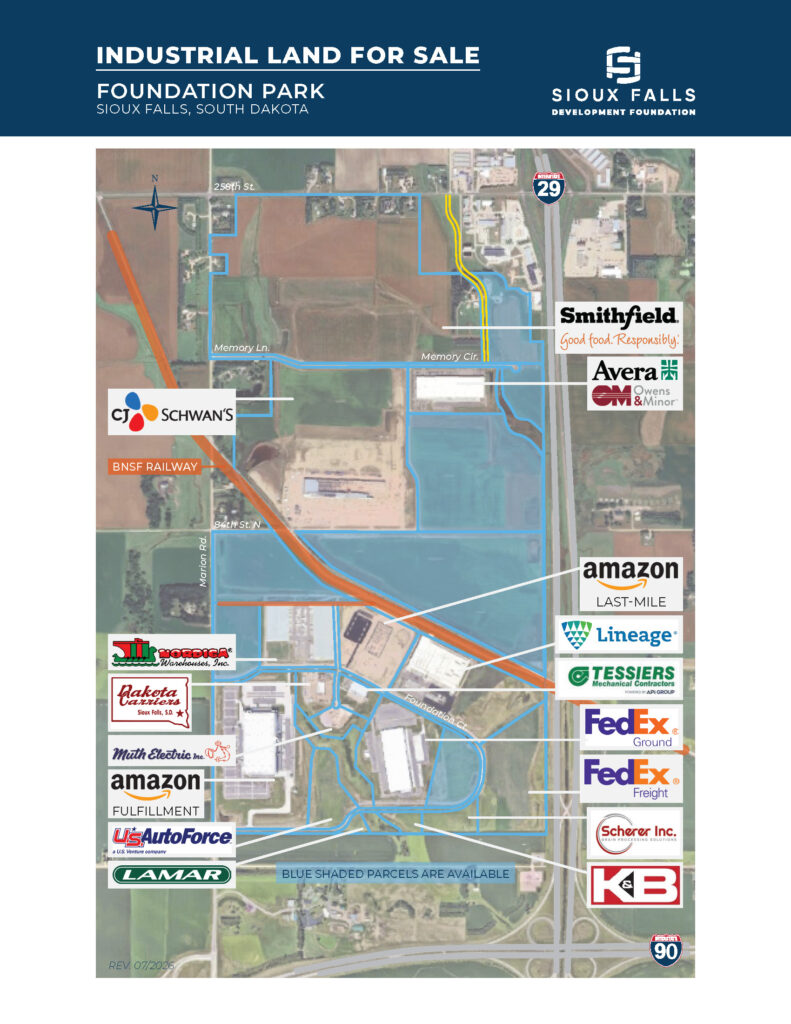
Foundation Park is perhaps the clearest example.
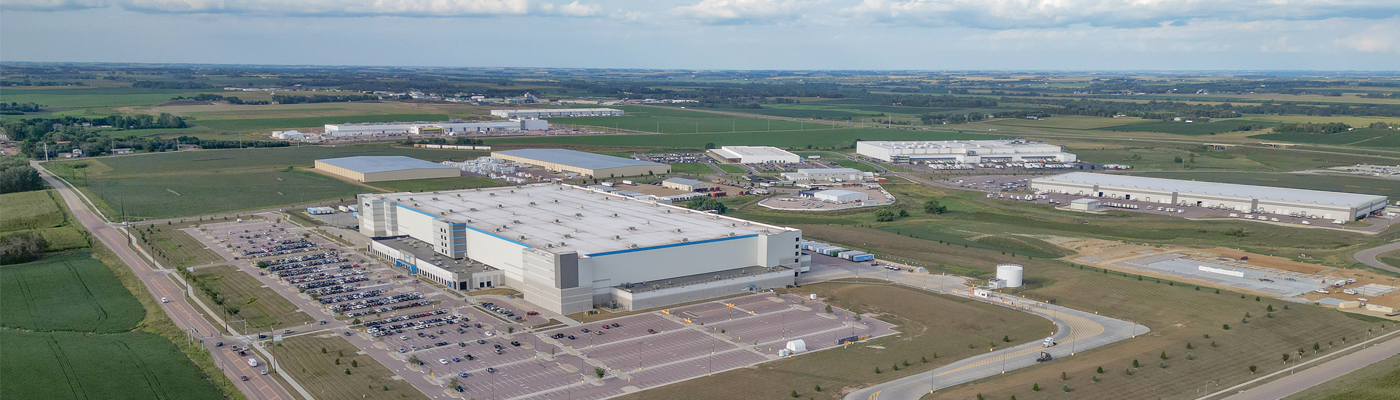
Developed by the Sioux Falls Development Foundation, Foundation Park was created to provide the type of large-scale, shovel-ready industrial sites that major companies require. Its location at the intersection of I-29 and I-90, along with access to BNSF Class I rail and utilities, demonstrates how site readiness can become a competitive economic-development asset.
The lesson is simple:
You can’t recruit what you don’t have.
Having quality industrial land available before a company needs it can be the difference between being considered for a project and being eliminated from consideration.
3. The People
Land may attract a company.
People allow it to grow.
Workforce availability has become one of the most important factors in economic development. A company considering a major investment needs confidence that it can recruit, train and retain the people necessary to operate its business.
That makes talent and workforce development an essential part of economic development—not a separate conversation.
The Development Foundation works with employers, schools, universities and community partners to strengthen those pathways.
Programs such as internships, apprenticeships, career exploration and talent attraction are designed to connect people with opportunities while helping employers develop the workforce they need.
This is why the Foundation views its work as two sides of the same house: Economic Development and Talent & Workforce Development.
You need both.
4. The Partnerships
No economic development organization does this work alone.
Successful projects require cooperation among businesses, developers, property owners, utilities, financial institutions, education partners, local government, state government and economic development organizations.
The Development Foundation often serves as a connector—bringing the right people to the table, helping identify challenges and working with partners to find solutions.
The recent Smithfield Foods project provides a good example.
When Smithfield evaluated its future in Sioux Falls, the opportunity involved far more than identifying a new location. The Development Foundation worked with the City of Sioux Falls and the Governor’s Office of Economic Development over several months to address land requirements, planning considerations and other issues while maintaining confidentiality around the discussions.
The announcement was the moment the public saw the result.
But the work had been happening long before the announcement.
That is often what economic development looks like: people from different organizations working together behind the scenes toward a common objective.
5. The Deal
Economic development projects are rarely as simple as a company deciding, “We want to move to Sioux Falls.”
There are questions to answer.
Can the site accommodate the project? Can infrastructure be delivered on schedule? What will the project require from utilities and transportation systems? What workforce challenges need to be addressed? What agreements need to be negotiated? What approvals are necessary?
There may be competing locations, changing timelines and issues that have to be resolved before a project can move forward.
Much of this work happens quietly.
Confidentiality is often an important part of the process because companies evaluating locations may not be ready to make their plans public.
And even after an announcement, the work isn’t finished.
Site preparation, infrastructure coordination, permitting, design and construction all follow.
The announcement is not the finish line. It is another milestone in the process.
6. The Announcement
Eventually, the hard work becomes visible.
There is a press conference.
There are cameras.
There is a groundbreaking.
There is a rendering of a new building and a company executive standing alongside community leaders.
For the public, that may feel like the beginning of the project.
For economic development professionals, it is often the culmination of months or years of work—and the beginning of another phase.
The announcement is when a community gets to see the result of the partnerships, preparation and planning that happened behind the scenes.
One economic development project can therefore create the foundation for the next opportunity.
Economic Development Is a Continuous Process
Economic development isn’t one project.
It isn’t one company.
And it certainly isn’t one groundbreaking.
It is the continuous work of preparing Sioux Falls for opportunity.
It means having industrial land available before a company needs it. It means investing in infrastructure. It means understanding the needs of employers. It means developing and attracting talent. It means building relationships with site selectors and companies. It means bringing public and private partners together to solve problems.
Most importantly, it means thinking beyond today’s announcement and asking:
What does Sioux Falls need to be ready for the opportunity that comes next?
That is the work of the Sioux Falls Development Foundation.
Sometimes that work is highly visible.
Much of the time, it isn’t.
But whether it is preparing a site, recruiting a company, developing a workforce, coordinating infrastructure or planning for the next generation of growth, the objective remains the same:
Create opportunities for businesses to grow, people to build careers and Sioux Falls to continue moving forward.
Because the groundbreaking may be the part everyone sees.